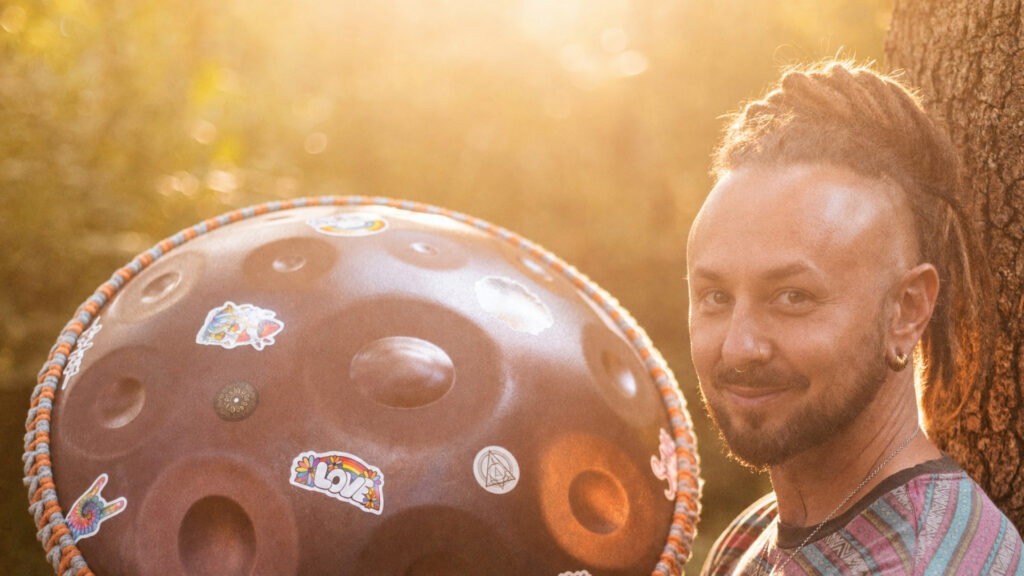
In an era where mental health is (finally) becoming a priority, more and more people are seeking complementary approaches to depression treatments. Among them, the handpan, this flying saucer-shaped instrument with captivating sounds, proves to be an unexpected source of comfort. Whether listened to, played alone, or practiced in a group, it opens a gentle path toward emotional peace.
Important: The handpan is in no way a substitute for medical or psychotherapeutic follow-up. It can accompany it, as a well-being resource among others.
The essentials
- Listening to the handpan soothes the nervous system and slows down intrusive thoughts.
- Its music allows you to express and release emotions without using words.
- Playing requires no musical knowledge and brings you back to your body and the present moment.
- In a workshop or class, collective practice helps to overcome isolation.
- It is a complement to care, never a replacement.

Why does listening to the handpan feel good?
Simply listening to the handpan can have a profound effect on your emotional state.
An enveloping and meditative sound
The handpan produces sounds rich in harmonics, both soft, deep, and airy. These vibrations act on the parasympathetic nervous system, which manages rest and recovery. It is not uncommon to feel calm from the very first notes.
A calming effect on the mind
The regularity of the strikes and the instrument’s natural echo create a state close to meditation. Listening slows down intrusive thoughts and provides a sense of emotional security, precious when experiencing depression or anxiety.
An emotional mirror
Certain handpan music acts as a mirror: it helps to express and release sadness, nostalgia, or buried pain, without using words. This gentle release can be a beginning of well-being.
Playing the handpan: an act of presence
Moving from listening to practicing transforms your relationship with yourself even more intensely.
Simple access to creativity
The handpan requires no musical knowledge to start. I still recommend taking a few classes or a workshop: there you learn to handle the instrument, to make the notes sound correctly, to understand its structure, and to explore different rhythms. These basics then greatly facilitate autonomous practice.
You can then improvise, explore, play freely. For someone experiencing depression, this is a rare opportunity to create without judgment or pressure.
Anchoring in the present moment
While playing, you reconnect with your body, with your breathing, with the moment. The gesture of gently striking the metal requires attention and gentleness. It’s a form of mindfulness in motion, a concrete alternative to meditation techniques, sometimes difficult to access when morale is low.
Expression without words
When words fail, music speaks. Playing the handpan allows you to externalize complex emotions without having to name them. This relieves and gradually restores inner energy.

Workshops and classes: reconnecting with human connection
While playing alone feels good, the experience takes on another dimension in workshops or regular classes.
Breaking out of isolation
Depression isolates. A handpan workshop or course offers a benevolent space, without competition, where everyone is welcomed as they are. Being surrounded, exchanging, and playing together reactivates social connection.
A collective resonance
During our workshops, the vibrations of the handpans blend and then harmonize, like a collective sound bath. This moment creates a very supportive sense of unity and belonging.
Support at your own pace
With an experienced teacher, everyone progresses at their own pace. The handpan becomes a companion on the journey, a mirror of personal evolution. This regularity offers a structuring framework, often reassuring during dark periods.
Frequently asked questions
Can the handpan cure depression?
No. It does not replace medical follow-up or psychotherapy. It is a complementary resource, offering a space for calm, expression, and connection.
Do you need to know how to play music?
No, no musical knowledge is necessary. A few classes or a workshop simply help you get started well.
Is it better to play alone or in a group?
Both complement each other. Playing alone brings you back to yourself and the present moment; playing in a group helps to overcome isolation and regain a sense of belonging.
The handpan, a gentle and accessible path
Whether listening, playing, or sharing in a group, the handpan offers a space of calm, connection, and beauty. It is an invitation to breathe differently, to feel again, to gently revive. At the heart of the sound, there may be a key to your well-being.
To go further, also read my article on the handpan and anxiety, or discover my online handpan courses.